Projects
Four active lines of research connect RNA's chemistry and processing to human disease — from fundamental modification mapping to disease-specific therapeutics.
We study RNA sequences and structures using an integrated approach — combining human genetics, molecular biology, and computational methods to understand RNA at the molecular level and its role in disease.
Themes in our research include:
RNA Modifications & Chemical Diversity

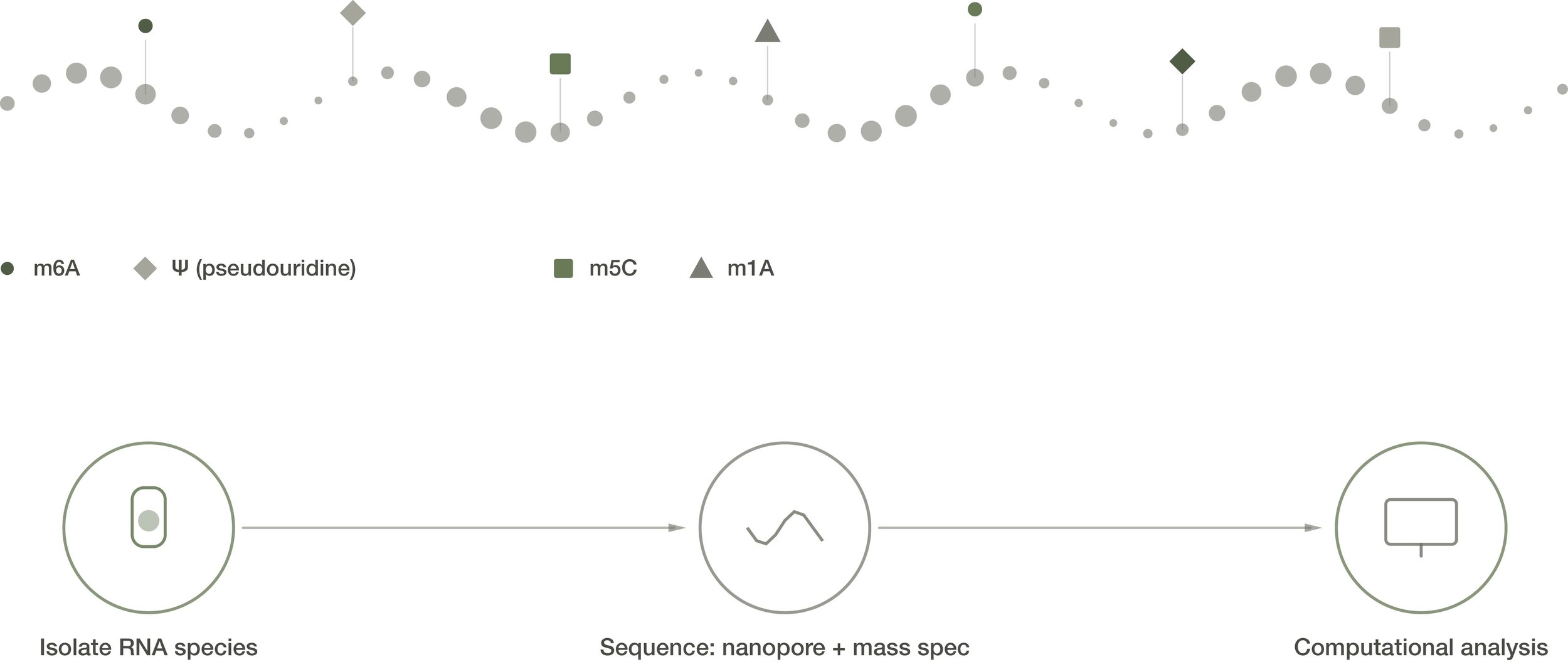
We map the chemical modifications that decorate RNA across human cells, combining direct Nanopore sequencing, mass spectrometry, and computational analysis to reveal where modifications occur and what they do.
Transcriptional & Co-transcriptional Regulation

We examine how nucleic acid sequences and structures, including R-loops, shape RNA Polymerase activity and the steps that process RNA as it is made, determining gene expression.
RNA Mechanisms in Neurological Disease

We trace how disruptions in RNA biology contribute to neurological disease, and apply what we learn to develop RNA-based therapeutics. We are currently focused on ALS4 and Alzheimer's disease.
RNA modifications in human cells
More than 180 chemical modifications have been found on RNA; however, which ones appear on which RNA types in human cells, and how much of each remains to be determined? We're mapping the modification landscape across the transcriptome. This means developing methods to isolate specific RNA species, sequencing them directly with Nanopore technology (which can detect modifications that standard sequencing misses), and, with collaborators, profiling them by mass spectrometry. Alongside the wet-lab work, we're building computational tools to analyze and visualize where these modifications occur and what patterns emerge.
Transcriptional and co-transcriptional RNA processing
Which genes a cell turns on, and how much, depends on more than switching transcription on or off; transcription is shaped by a tightly regulated cascade of steps during and after RNA synthesis. We study how the sequence and structure of nucleic acids control RNA polymerase's behavior as it moves along a gene. A focus of ours has been R-loops, three-stranded structures formed when nascent RNA re-anneals to its DNA template, which can stall RNA polymerase mid-transcription. Using molecular, genetic, and genome-wide approaches, we're mapping where and how these co-transcriptional events shape gene expression.
Amyotrophic lateral sclerosis (ALS4)
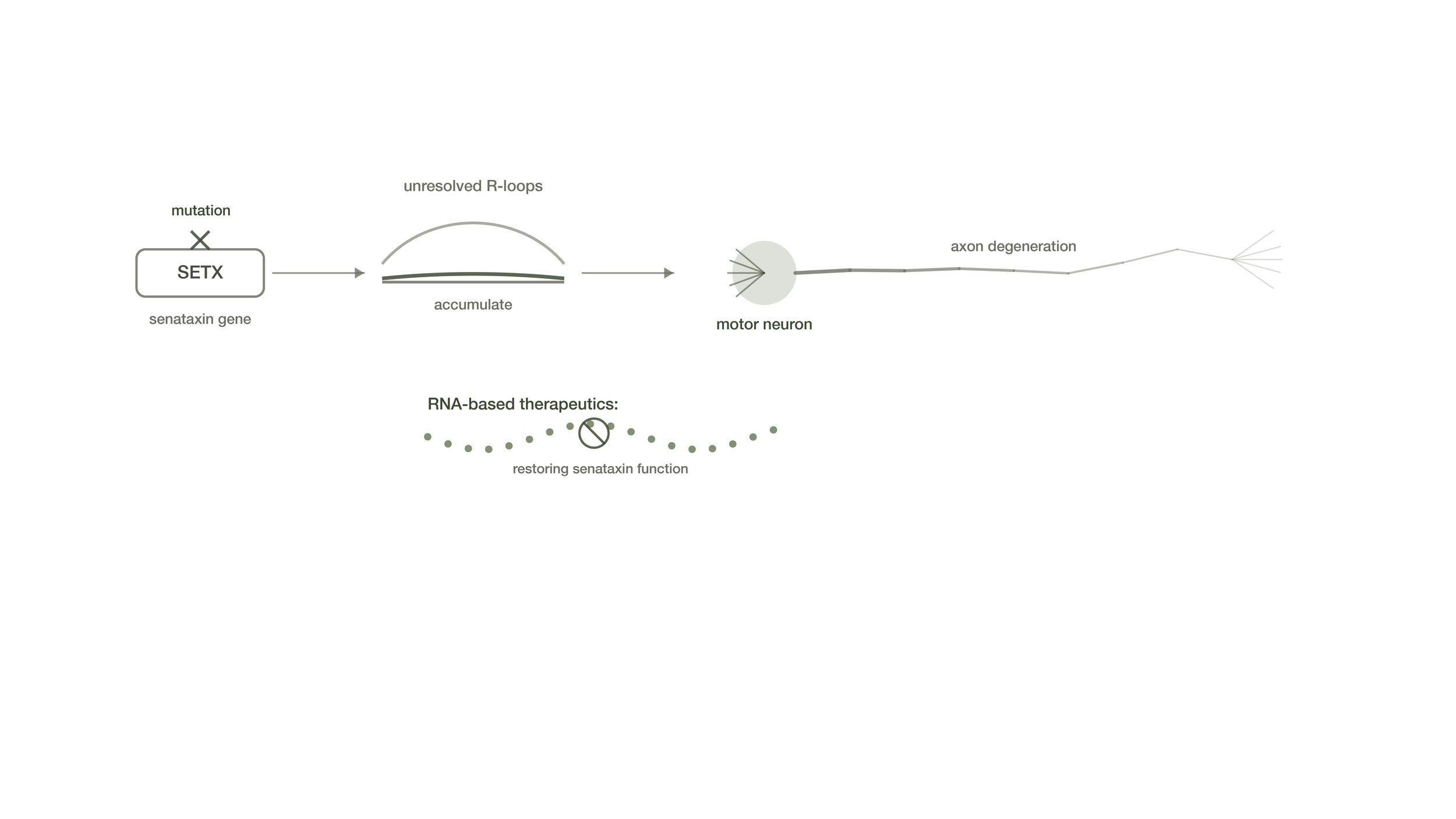
ALS4 is a juvenile-onset motor neuron disease affecting both upper and lower motor neurons. ALS4 is caused by mutations in senataxin (SETX), an RNA-DNA helicase whose job is to resolve R-loops. In collaboration with colleagues at NIH, we're defining the natural history of ALS4 and uncovering the molecular mechanisms that link senataxin dysfunction to motor neuron degeneration. We're also studying senataxin's normal cellular role and developing RNA-based therapeutics for the disease.
APOE & Alzheimer’s Disease
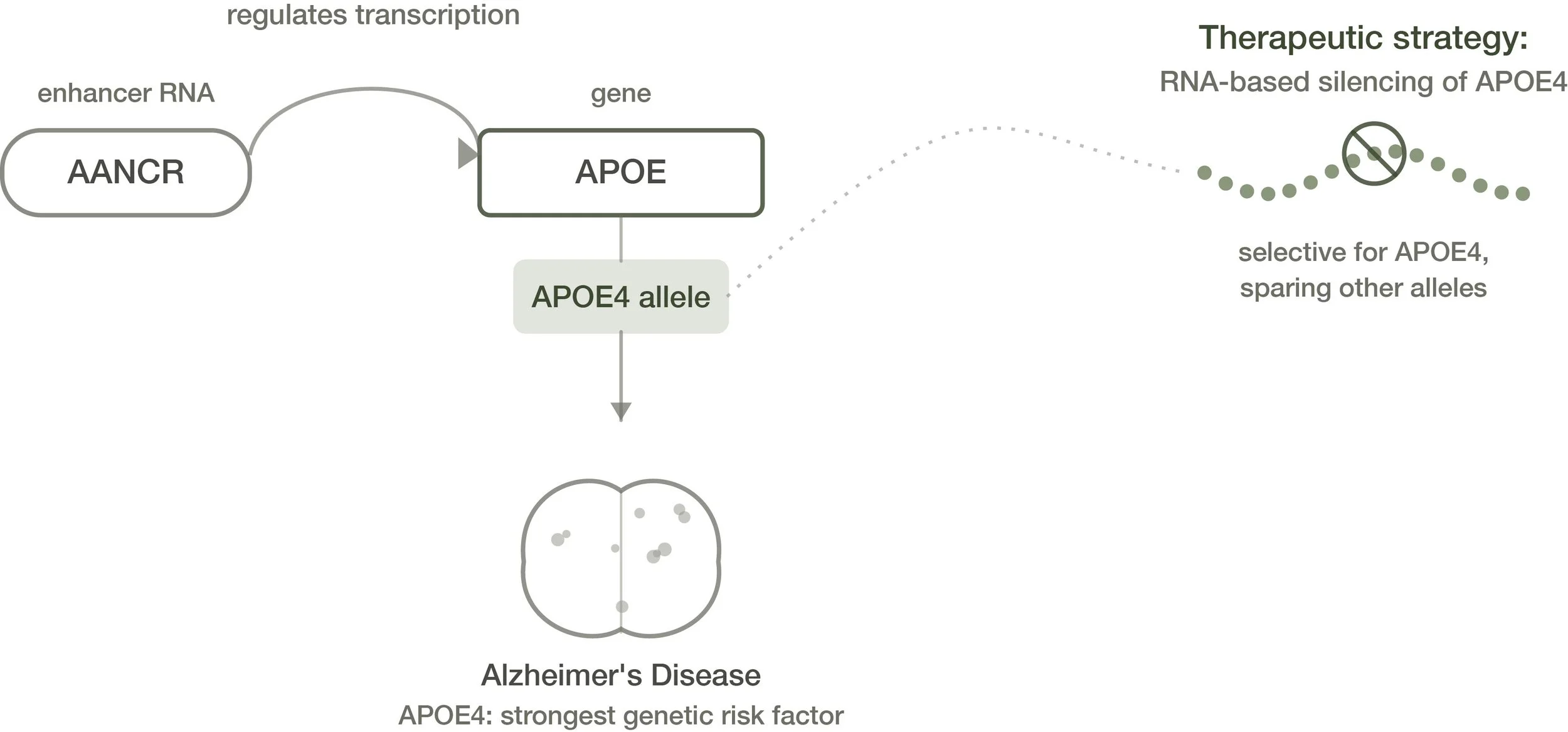
Alzheimer's Disease affects roughly 7 million Americans and 55 million people worldwide, and the APOE4 allele is its strongest genetic risk factor. Nearly 70% of AD patients carry at least one APOE4 copy. Yet most current therapies weren't designed with APOE4 carriers in mind, and can be less effective or riskier for this majority of patients. We discovered an enhancer RNA, AANCR, that controls APOE transcription, and we're using that biology to develop RNA-based therapeutics that selectively silence the APOE4 allele.
Our Mission
We harness the power of RNA’s chemistry, function, and structure using omics data to advance treatment strategies for neurological disorders.